

Summer Undergraduate Preparation in Environmental Research
The Summer Undergraduate Preparation in Environmental Research (SUPER) program is a 13-week, 16-credit summer experience combining field coursework and mentored ecological research at Au Sable's Great Lakes campus.
SUPER students learn to develop research questions, design investigations, collect and analyze data, and communicate scientific findings. Working with Au Sable research mentors, students explore ecological questions that interest them and may contribute to ongoing conservation research.
No previous research experience or proposed research project is required. Students develop their investigations with research mentors during the summer.
All SUPER students receive a $2,000 Research Fellowship toward tuition. Students may also select coursework that fulfills the requirements of an Au Sable certificate while completing SUPER. Students completing an eligible certificate may qualify for an additional $1,000 Certificate Completion Grant.
Learn more about academic requirements in the Au Sable Institute Academic Catalog.


Prepare for Research. Explore Your Interests. Build Professional Skills.
How Super Works
SUPER combines 16 college credits with hands-on research experience over Au Sable's three summer sessions:
May Session (3 weeks): One four-credit course
Summer Session I (5 weeks): One four-credit course and Research Methods I (2 credits)
Summer Session II (5 weeks): One four-credit course and Research Methods II (2 credits)
Students select courses that complement their academic interests and research goals. Through Experimental Design (Research Methods I) and Science Communication (Research Methods II), students learn to formulate research questions, develop study designs, collect and analyze data, and communicate their findings through scientific writing and presentations.
SUPER students work closely with Au Sable's research mentors throughout the summer. Students may contribute to established research projects or develop their own investigations with mentor guidance. Research topics and projects are developed during the program, allowing students to explore new interests and opportunities before deciding what to study.
Earn a Professional Certificate
SUPER's three-session structure also makes it possible to complete an Au Sable professional certificate while participating in research. By selecting complementary courses, students can pursue one of the following certificates in a single summer:
Ecological Restoration Practitioner
May: Applied Conservation Field Skills
Summer Session I: Field Botany & Experimental Design (Research Methods I)
Summer Session II: Restoration Ecology & Science Communication (Research Methods II)
Forest & Land Management Practitioner
May: Forest Management
Summer Session I: Field Botany & Experimental Design (Research Methods I)
Summer Session II: Land & Water Resources OR Environmental Applications for GIS & Science Communication (Research Methods II)
Wildlife Monitoring Practitioner
May: Field Entomology
Summer Session I: Herpetology OR Mammalogy & Experimental Design (Research Methods I)
Summer Session II: Wildlife Ecology & Science Communication (Research Methods II)
Certificate completion is optional. Students are free to select other courses that better align with their academic and research interests.
Financial Assistance
All students admitted to SUPER receive a $2,000 Research Fellowship toward tuition.
Students completing an approved certificate course sequence may also qualify for an additional $1,000 Certificate Completion Grant, along with other applicable financial aid.
Full program requirements, certificate options, tuition, and financial aid policies are available in the current Au Sable Institute Academic Catalog available on the college program website.
Research at Au Sable
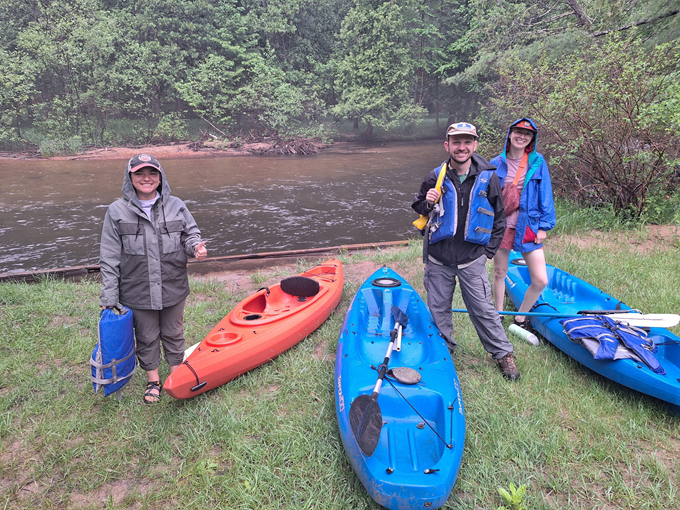
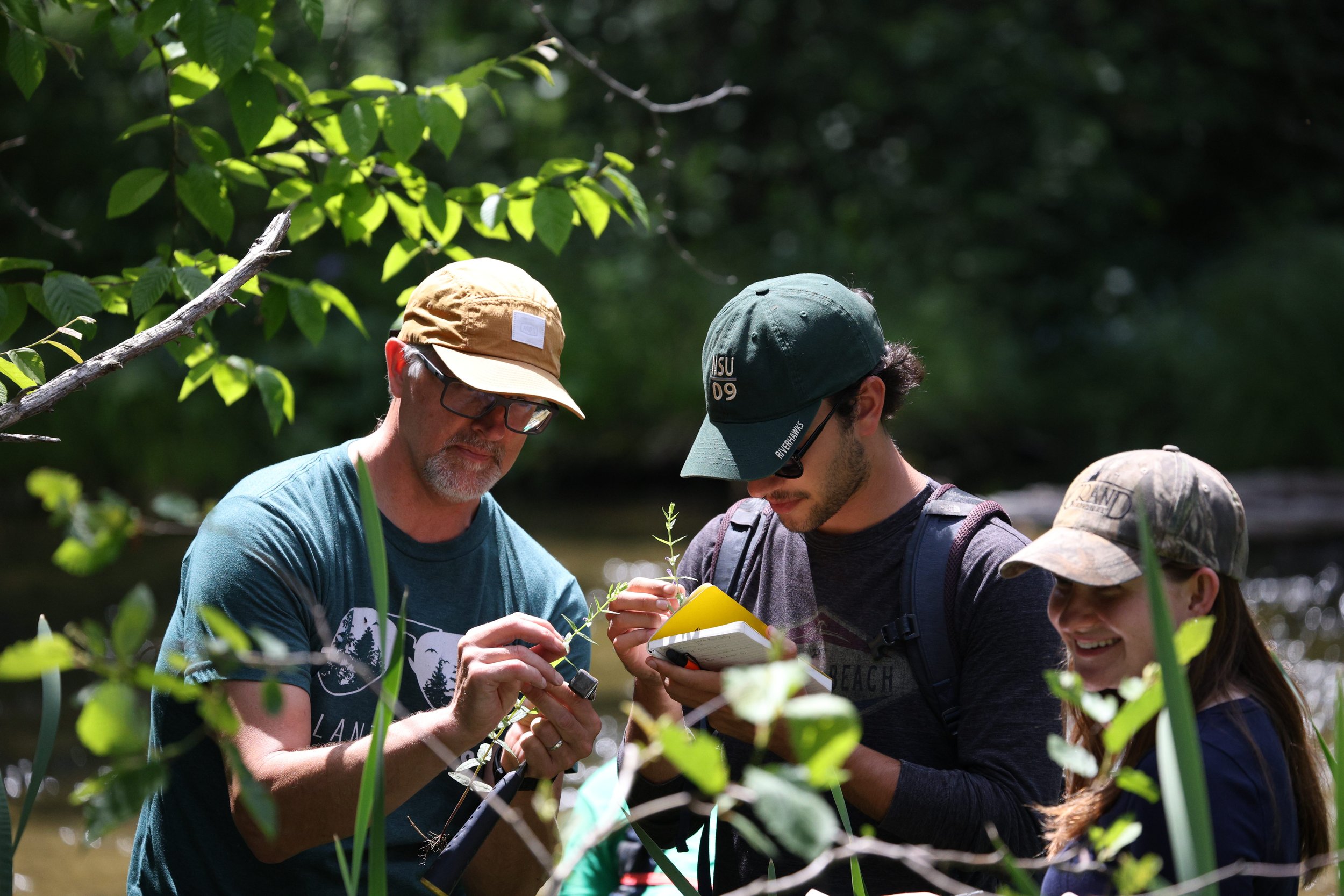
SUPER students gain experience conducting authentic ecological research in the diverse landscapes of Northern Michigan, including forests, wetlands, streams, lakes, and other natural ecosystems.
Research projects are guided by students' interests, mentor expertise, and available research opportunities. Some students contribute to ongoing investigations with Au Sable staff and conservation partners, while others develop individual questions inspired by their coursework and field experiences.
Students do not need to arrive with a research proposal. Instead, they work with research mentors to explore potential topics, develop appropriate methods, and conduct investigations during the summer.
Recent Research: Beavers at Work on the Boardman River
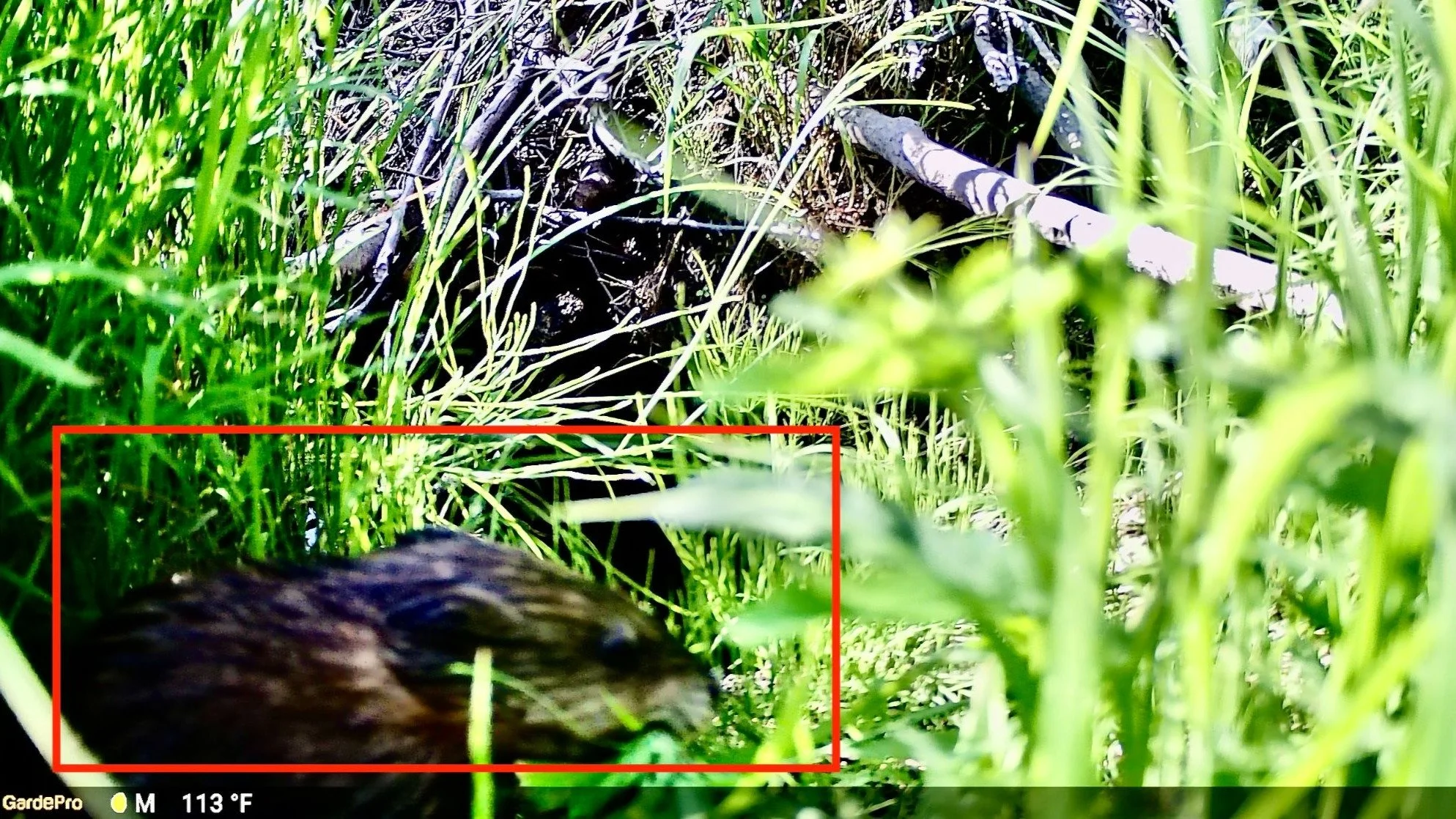
In summer 2026, Au Sable students investigated North American beaver activity along the Boardman River near Traverse City, exploring how these ecosystem engineers are influencing a river recovering from the removal of three dams.
Working by kayak and on foot, students surveyed more than seven kilometers of river, documented beaver lodges and other signs of activity, deployed wildlife cameras, and used GIS to map their findings.
The project established a baseline for future monitoring and raised new questions about beaver habitat use, river restoration, and the interactions between wildlife and people.
This work illustrates the kinds of conservation questions SUPER students may explore. Research opportunities vary from year to year, and students are encouraged to pursue topics that interest them.
Application
SUPER is designed for students interested in developing research skills, particularly rising sophomores and juniors preparing for advanced coursework, senior research projects, or future research opportunities.
Previous research experience is not required, and students do not need to identify a research topic before applying.
Application Process
Complete the regular Au Sable application for admission on the college program page. This includes the usual academic information and approval from your home institution.
Submit the supplemental SUPER application. The only additional requirement is a brief statement describing your interest in ecological or environmental research and how SUPER might support your academic or professional goals.
Enroll in your SUPER courses. Following admission, students complete course registration for the three summer sessions, including Research Methods I and II.
SUPER applications are reviewed on a rolling basis after the regular Au Sable admission application is complete, subject to appropriate academic preparation and available research mentoring capacity.
Students are encouraged to apply early to secure space in their preferred courses.
For official program requirements and financial aid information, consult the current Au Sable Institute Academic Catalog.