What happens when one ecosystem engineer moves into a landscape shaped by one of Michigan’s largest river restoration projects?
This past summer, Au Sable students set out to find out.
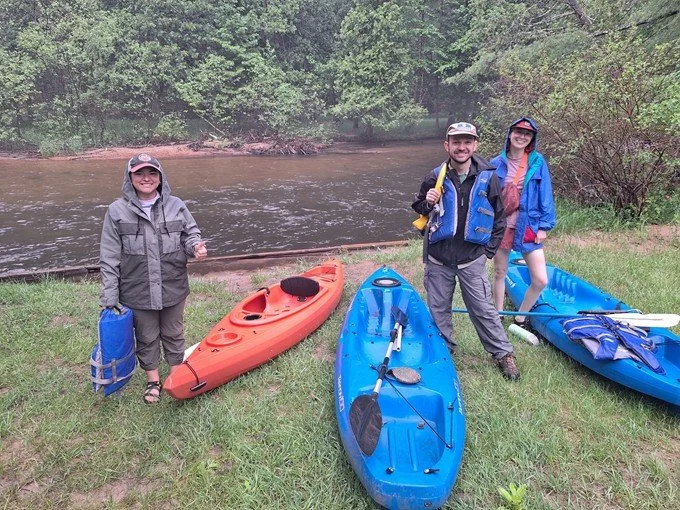
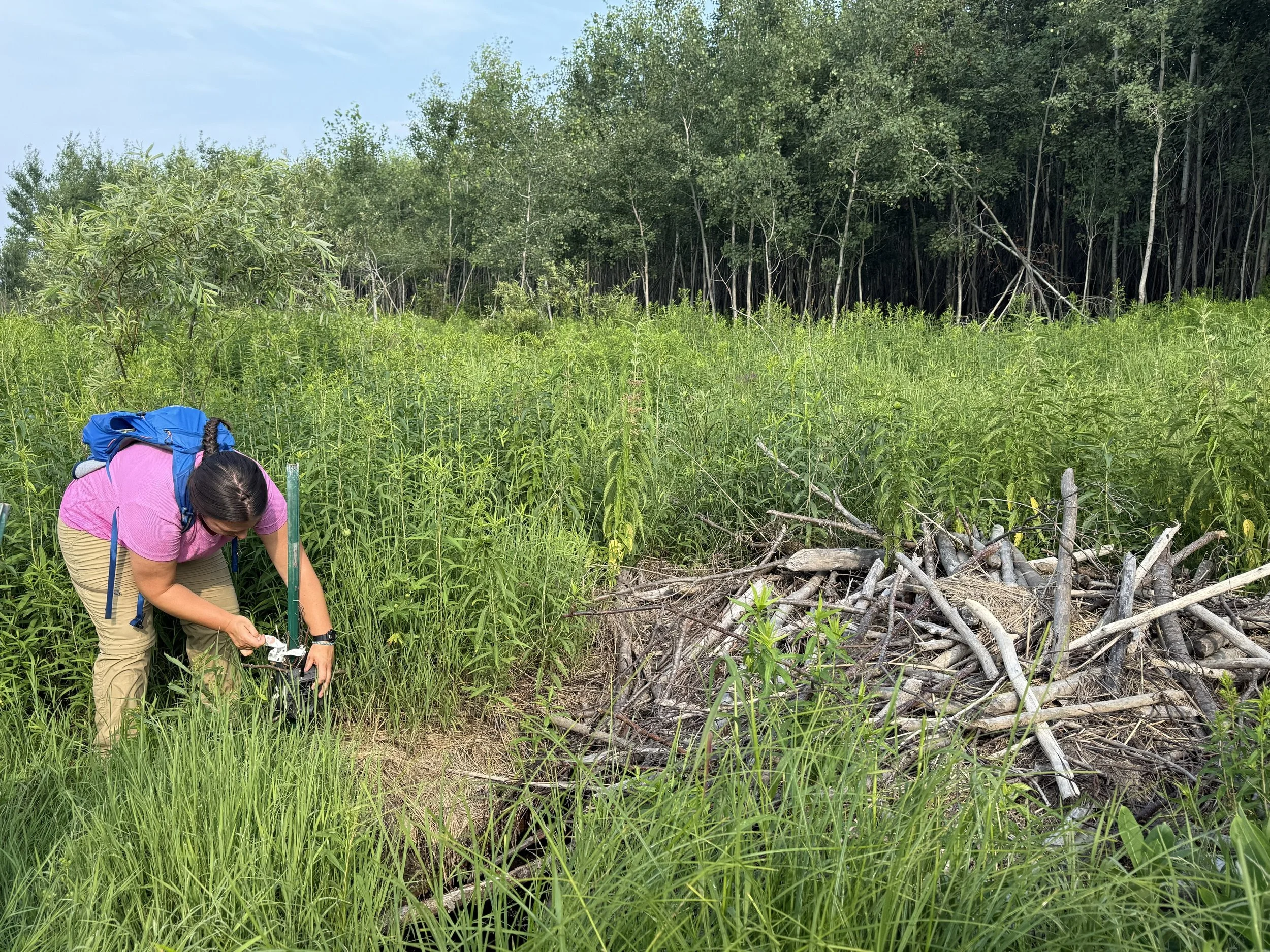
Working along the Boardman River in the Brown Bridge Quiet Area near Traverse City, students surveyed more than seven kilometers of river by kayak and on foot, searching for signs of North American beaver activity. They mapped lodges, food caches, slides, scat, and other evidence of beaver presence and deployed wildlife cameras at selected lodges to better understand where beavers were actively using the river.
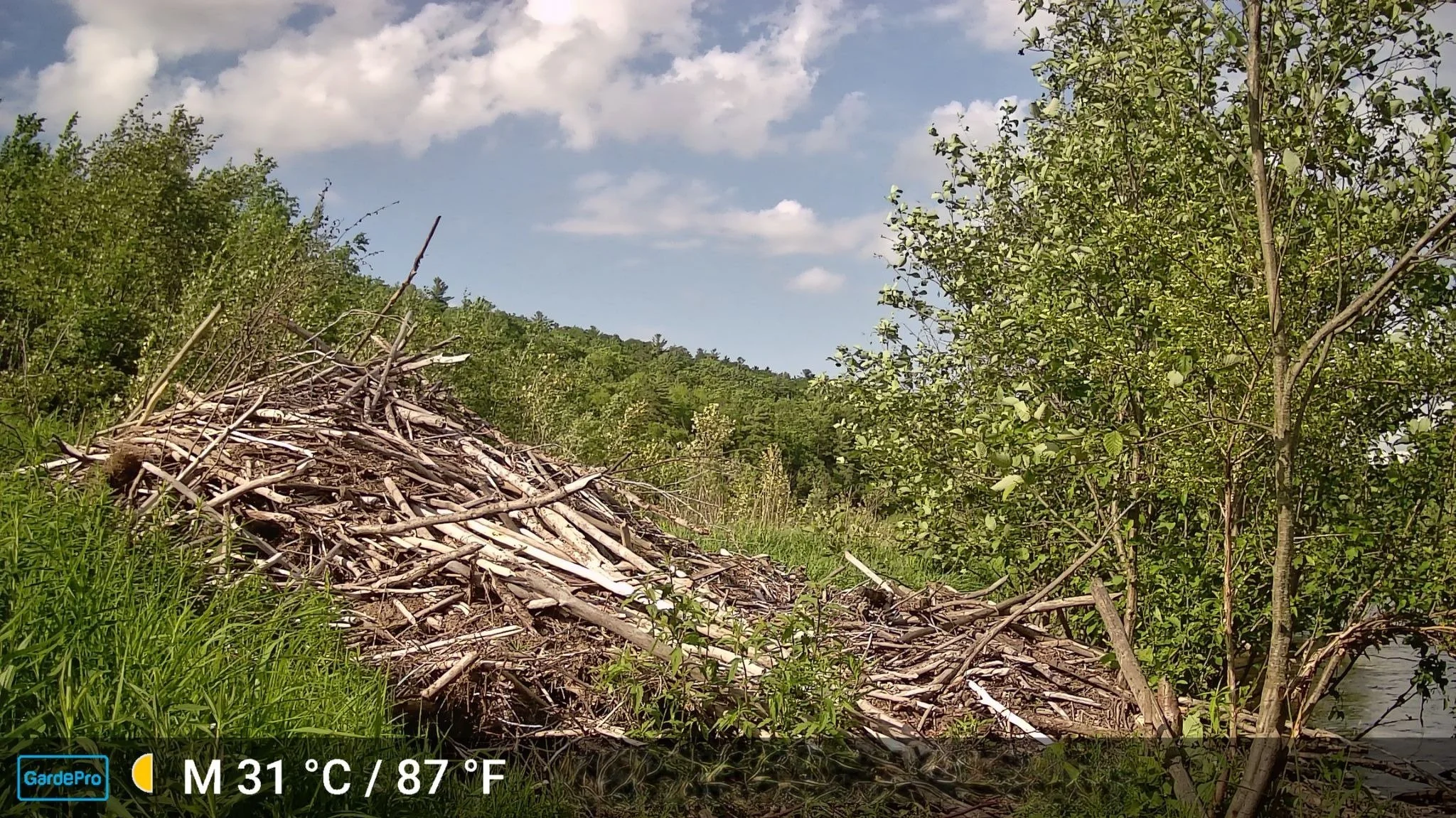
The results revealed a landscape heavily influenced by beavers. Students documented 10 lodges, 15 food caches, 14 slides, and one scat location, while trail cameras recorded beavers at three monitored lodges. Evidence of activity was particularly concentrated in the middle and downstream portions of the study area.
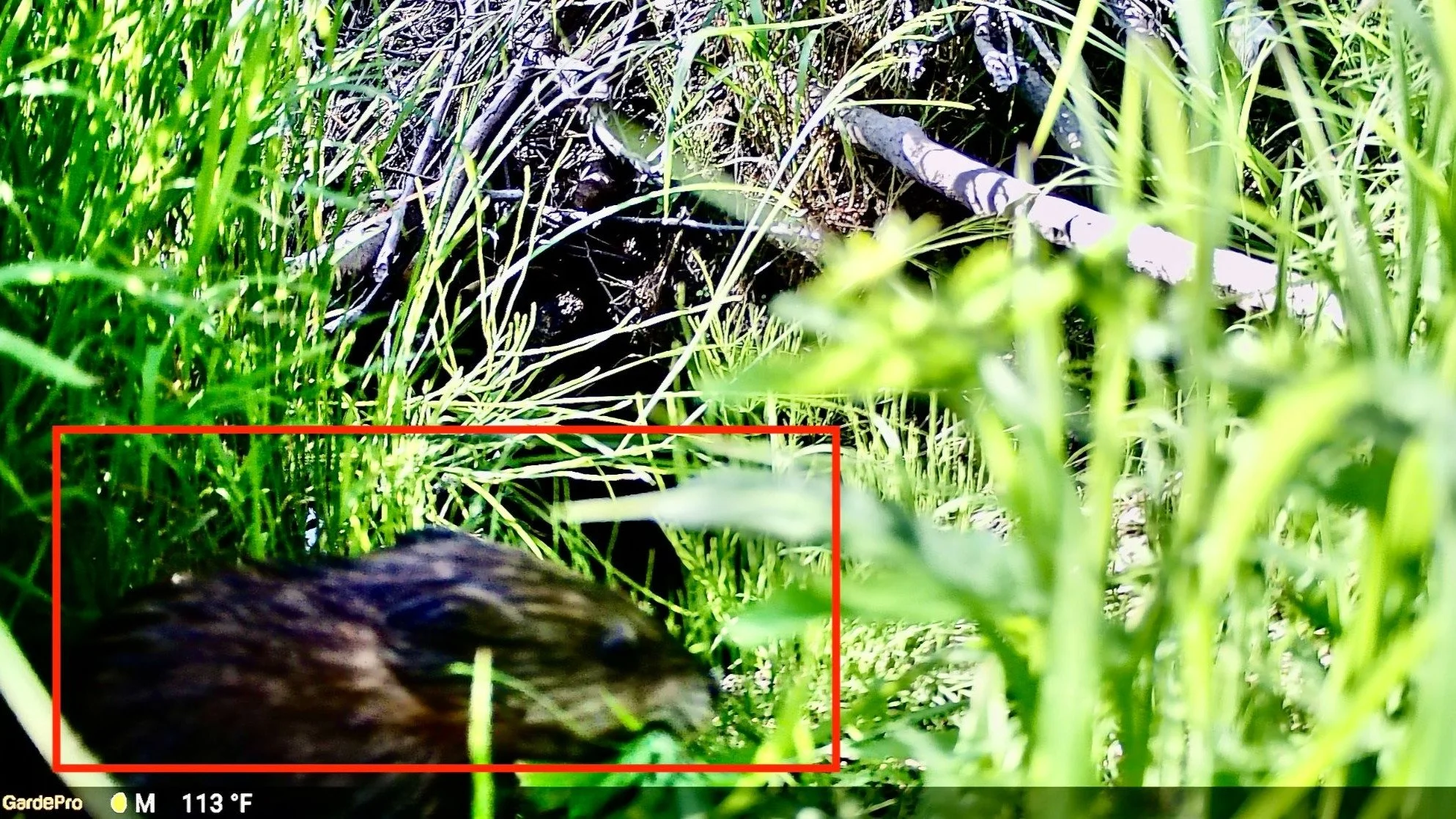
Beavers are especially interesting on the Boardman because the river itself is undergoing ecological recovery following the removal of Brown Bridge, Boardman, and Sabin dams. By cutting vegetation, modifying banks, storing water, and creating new habitat, beavers alter many of the same ecological processes that river restoration seeks to recover. Their activity can benefit fish and wildlife while also creating challenges for trails, paddlers, and other recreational users.
The project establishes an important baseline for future monitoring. Repeating these surveys could help researchers track changes in beaver occupancy, vegetation, and river habitat while helping local land managers better understand where beaver activity complements restoration (and where humans and beavers may increasingly share the same space).
For Au Sable students, the project also offered a chance to navigate a real management question, collect field data, use trail cameras and GIS, and contribute information that can help guide stewardship of a remarkable recovering river.