What happens when students take what they’ve learned about restoration ecology and put it into practice? This summer, the answer took root at Sands Park in Kalkaska.
Au Sable Institute’s Restoration Ecology class partnered with the Kalkaska Conservation District and Coldsprings Township to help restore a small but important area of the community park along the shore of Manistee Lake. Students studied the site, identified challenges with erosion and limited native plant diversity, and developed a plan to help the land thrive.
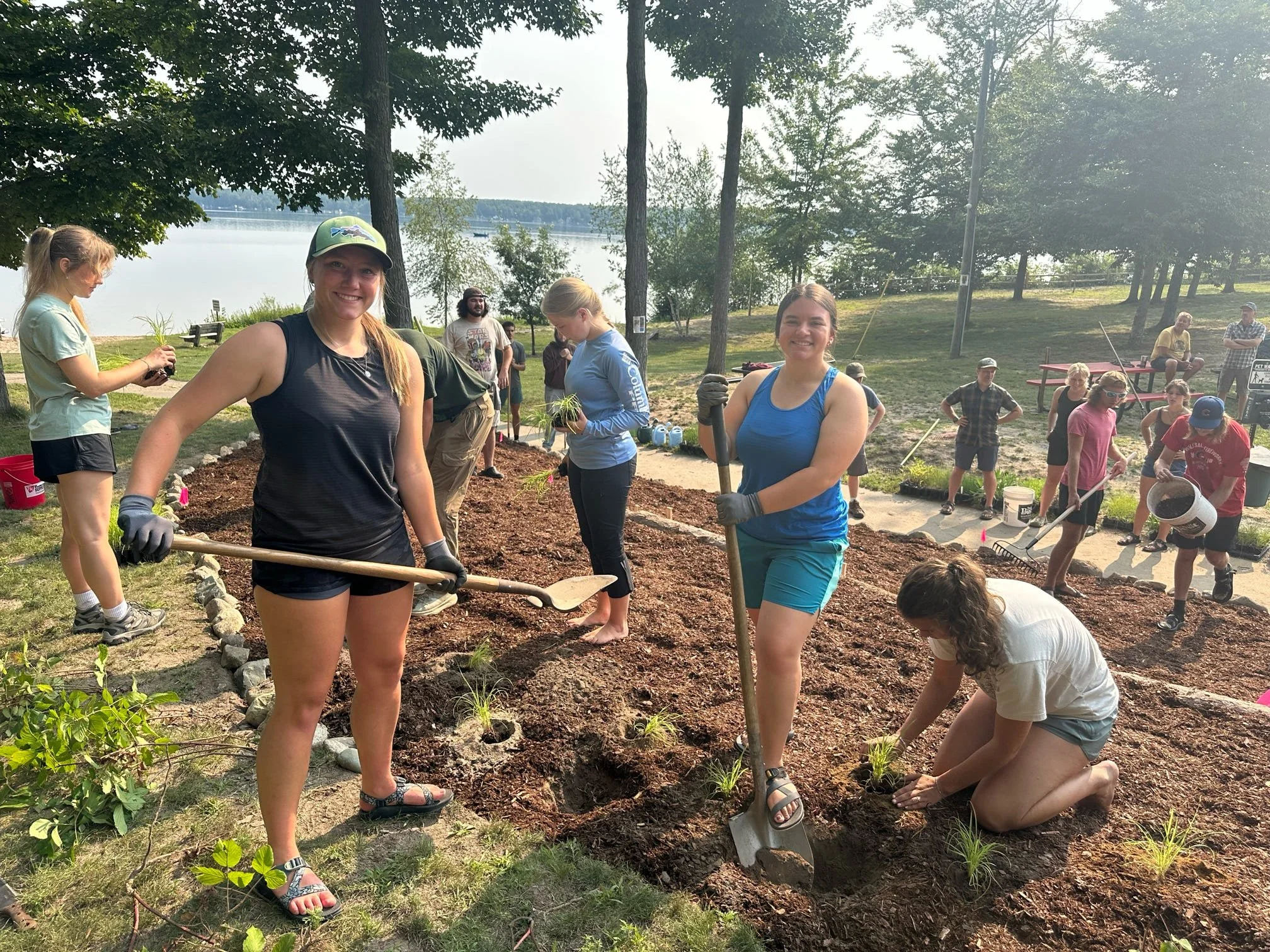
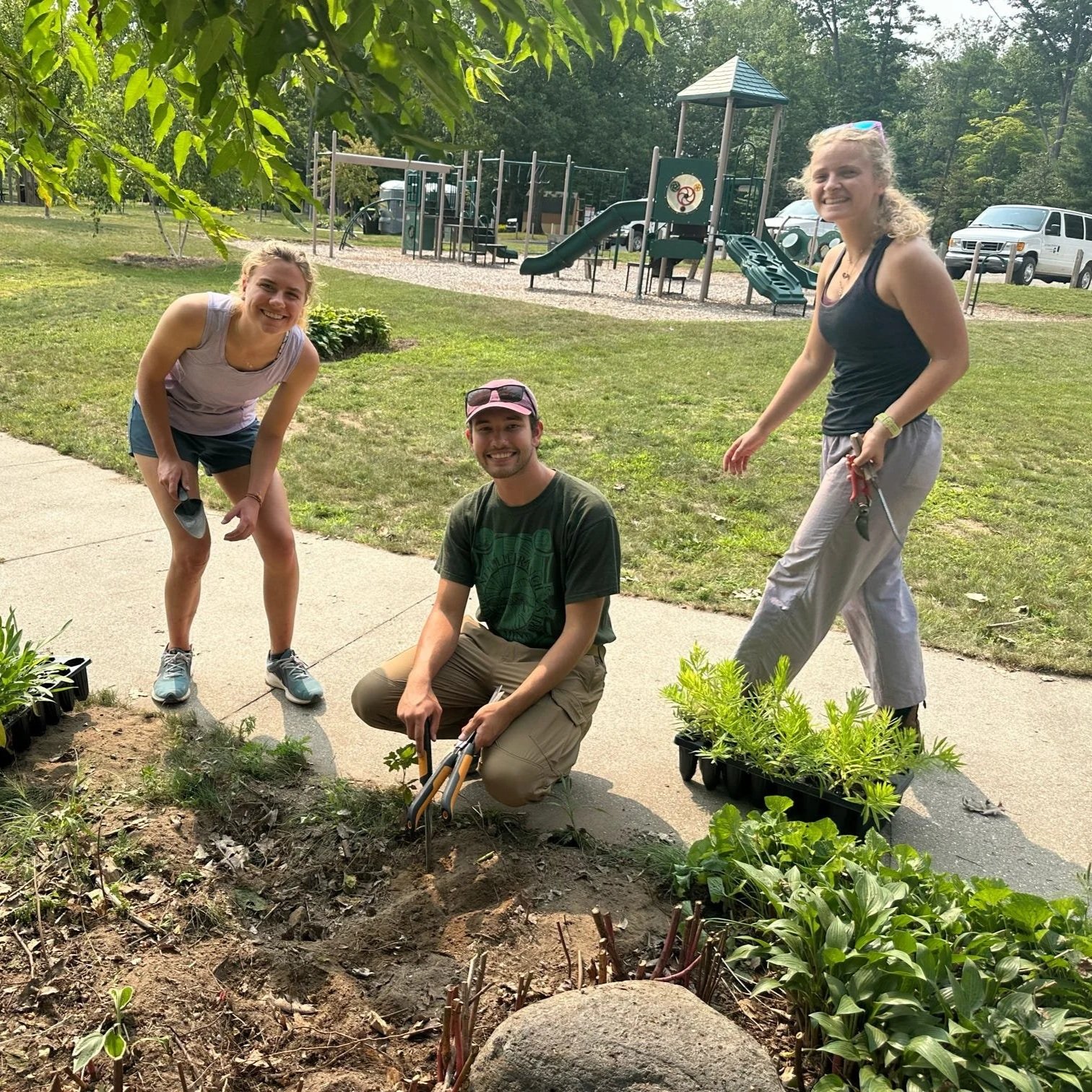
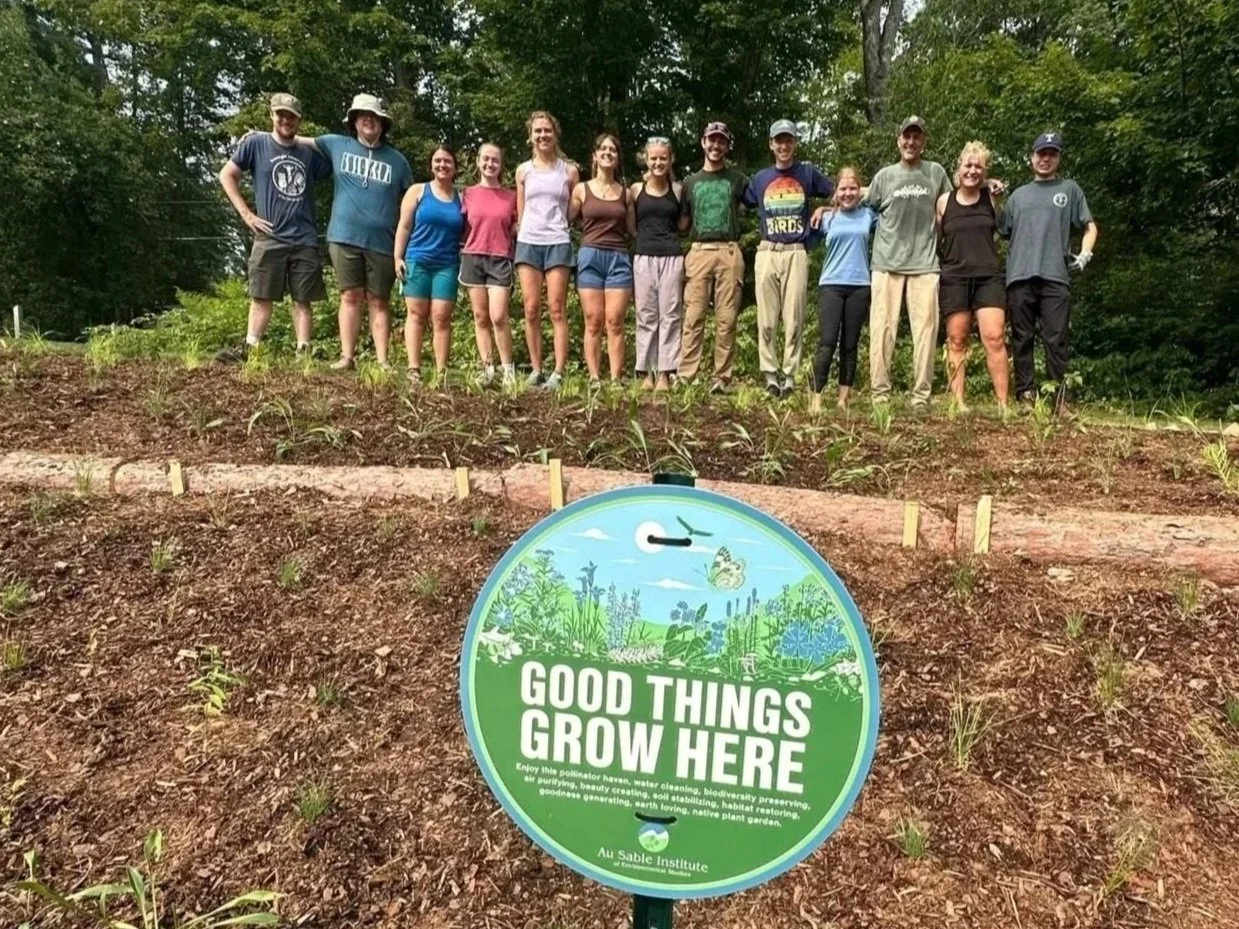
On August 12, the Au Sable students, staff, and faculty came together to put that plan into action. Seventeen varieties of native grasses and wildflowers (900 plants in total) were planted along the hillside, including butterfly weed, purple coneflower, black-eyed Susan, and prairie dropseed. The team also added simple features to help slow runoff and protect the soil and beach area.
While the changes may seem small, they represent something much bigger: an opportunity to care for a place that belongs to the whole community. As these native plants grow, they will help stabilize the hillside, provide food and habitat for pollinators and birds, and bring new beauty to the park.
For Au Sable, restoration is about more than improving landscapes. It is about learning to see the places around us as gifts from God worth knowing, tending, and protecting. In short, it’s about Creation Care. At Sands Park, students had the opportunity to do just that while putting their education and faith into action and leaving a little piece of the community better than they found it.